Should You Buy the Hyperx Flipcast in 2026? A Deep Dive
I've been using the Hyperx Flipcast for several months now as my go-to microphone for weekday livestreams, occasional podcast recording, and quick voiceovers. I bought it originally because I wanted a compact, easy-to-use USB mic that wouldn't take over my small desk and that I could unplug and toss into a backpack for travel. What I found was a product that gets a lot of things right for content creators on a budget, but also leaves off a few features that power users will miss.
Why I bought the Flipcast
My setup is intentionally modest: a small apartment desk, a single monitor, and a tendency to stream or record in the evenings (when my partner is home and there’s ambient noise). I wanted something that sounded better than my laptop mic but didn’t require an audio interface, a complicated voice chain, or constant fiddling. The Flipcast promised plug-and-play simplicity, a compact footprint, and a modern design that wouldn't dominate my desk. After living with it across several months and different recording scenarios, I feel comfortable sharing what actually worked and what didn’t.
First impressions and build quality
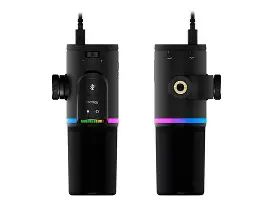
Out of the box the Flipcast feels light but well-built. The top cap and body have a matte finish that resists fingerprints, and the small footprint is exactly what I wanted for a dual monitor desk. The stand is short and sturdy enough for tabletop use, though I immediately swapped in a boom arm. The Flipcast’s mount system worked with my boom after a quick adapter swap — not perfectly, but once it was clamped in place it stayed solid.
One small detail I liked: the mute flip or touch control is intuitive. I found myself toggling it mid-stream without thinking. The mic also has a subtle LED status indicator that’s bright enough to see across the room but not distracting on camera.
Sound and recording experience
Now the part everyone wants to know: how does it sound? In my experience the Flipcast delivers a clear vocal presentation that is better than built-in laptop mics and most entry-level USB mics I’ve used. Voices come through with good presence — the midrange is where the mic focuses, so speech is intelligible and warm. Highs are detailed without being harsh, though very bright singers or sibilant voices may notice a slight emphasis in the upper midrange. Low end is present but not overly boosted; it gives enough body to voices without muddying them.
I used the mic for three primary tasks: streaming with live chat interaction, recording a short two-person interview, and recording dry voiceovers for short YouTube videos. For streaming, the Flipcast handled my voice well over game noise and background hum from an air purifier. With a modest amount of noise reduction applied in my streaming software, my voice held up cleanly. For the interview recording (two mics, remote participants), the Flipcast captured the guest well when positioned properly, but its pick-up pattern is not a magic bullet — placement matters. For short voiceovers, I appreciated the immediacy: plug in, set gain, and record. I didn't have to chase hiss or boominess in post as much as I did with cheaper mics.
That said, the Flipcast is not a studio-grade large-diaphragm condenser. When I compared it back-to-back with my desktop condenser (a much larger microphone), I noticed less depth in the sub-bass and a narrower stereo image. If you’re recording vocals for music, you’ll probably want something with more headroom and a richer low end. But for spoken word content — streaming, podcasting, voiceovers — Flipcast is very respectable.
Shop the latest Audio & Headphones picks on Amazon.
Shop Amazon →Noise floor and handling
One thing I tested carefully was the self-noise. I recorded a few seconds of room silence with the mic plugged in and the gain set for typical speech. In a quiet room, the noise floor was present but low; it was noticeable only when I boosted quieter takes in post. In real-world use (my apartment, evening HVAC, occasional traffic), the Flipcast's noise floor never became a problem. Handling noise is controlled fairly well thanks to the built-in isolation, but if you tap the desk or reposition the boom you will hear thumps — so I still recommend a boom arm with a shock mount for serious recording sessions.
Latency and monitoring
The Flipcast supports direct monitoring via a headphone jack on the mic, and I used that feature a lot during streams. I noticed near-zero latency in Windows when monitoring through the mic, which is exactly what I expect and appreciate. The monitoring level control is a small dial on the mic body — not the most precise encoder I've used, but effective. One minor annoyance: when switching between apps the monitoring balance sometimes needed a quick tweak, likely because of how Windows handles default device switching. Not a deal-breaker, but something to be aware of if you live in a multi-app streaming environment.
Software and customization
Hyperx’s companion software lets you toggle presets and apply basic EQ and noise reduction. In my experience, the software does the job for casual users: there are a few presets for streaming/podcast, and a simple EQ that helps tame sibilance or boost clarity. However, the software is not as deep as some competitors' suites. If you like fine-grained control or want onboard multi-band compression and gate controls, you'll find the Flipcast software limited. I often used the stock sound and applied light processing in my streaming software for best control.
I appreciated the convenience of having a “voice clarity” preset for quick setups, but I noticed that aggressive software processing can make the audio sound a bit artificial. In my testing, a lighter touch produced the most natural results.
Real-world durability and daily use
After months of plugging and unplugging, the USB-C connector has held up well. I traveled with the mic a couple of times and it survived being tucked into a padded sleeve. The physical mute mechanism remained reliable; I did not experience accidental mutes during streams. The one area where I’d like to see improvement is the stand-to-mic screw — it could be a touch more robust for heavy-handed adjustments, and I would have liked a more universal thread for easy compatibility with all third-party mounts.
Pros & Cons
- Pros:
- Compact, desk-friendly form factor that doesn’t dominate space
- Clear, present vocal sound ideal for streaming and spoken word
- Easy plug-and-play setup with USB-C and near-zero monitoring latency
- Intuitive mute control and useful LED status indicator
- Good value for creators who want quality without an audio interface
- Cons:
- Not as rich or full as studio large-diaphragm condensers for music
- Companion software is basic compared to some competitors
- Mounting adapter compatibility can be fiddly; stand screw feels average
- Noise floor is low but noticeable if you heavily amplify quiet recordings
- No XLR option or internal multi-pattern switching for advanced recording setups
How the Flipcast compares (quick table)
| Model | Form Factor | Best For | Connectivity | Sound Character | Standout |
|---|---|---|---|---|---|
| Hyperx Flipcast | Compact USB tabletop | Streamers, podcasters, travel creators | USB-C, headphone monitoring | Clear, mid-forward, natural for speech | Small footprint + intuitive mute |
| Hyperx QuadCast S | Desktop condenser with RGB | Streamers who want mic presence and aesthetics | USB-A/C, multiple polar patterns | Full-bodied, versatile | Multi-pattern flexibility and visuals |
| Elgato Wave:3 | Desktop USB condenser | Streamers who use software mixing | USB-C, Wave Link software | Clean, slightly warm | Integrated mixer software |
| Rode NT-USB Mini | Compact USB condenser | Podcasters and home studios | USB-A/C, modular mount | Punchy with solid lows | Simple, rugged, good hardware controls |
Who should buy the Flipcast in 2026?
In my experience, the Flipcast is a strong pick for a few specific user profiles:
Find top-rated Audio & Headphones products at great prices.
Browse Now →- New streamers and podcasters: If you’re upgrading from a headset or laptop mic, the Flipcast offers an immediate, audible improvement without needing an audio interface or steep learning curve.
- Creators with limited desk space: Its compact footprint and intuitive controls make it ideal for small desks or shared workspaces.
- Traveling creators: I packed mine on two trips; the Flipcast is small enough to travel with and sturdy enough to survive a carry-on bag.
It’s less ideal for:
- Musicians and singers recording vocals: If your priority is studio-quality vocal capture for music, you’ll probably want a large-diaphragm condenser and an audio interface.
- Advanced audio engineers: If you need XLR, multi-pattern switching, or deep onboard DSP, the Flipcast will feel limiting.
Buying guide: what to check before you buy
If you’re considering the Flipcast, here are the practical things I checked and would recommend you verify for your own setup:
- Desk and mounting options: Decide whether you’ll use the mic on its short stand or a boom arm. If you plan on a boom, confirm thread compatibility or that you have the appropriate adapter.
- Monitoring needs: If you want near-zero latency monitoring without an audio interface, the Flipcast’s headphone jack is a big benefit. Test it if possible to ensure monitoring levels meet your expectations.
- Software expectations: If you want in-depth DSP and advanced routing, Factor that in—Flipcast’s software is geared toward simplicity. I used external software for compression and gating when I needed fine control.
- Space and sound treatment: Even the best USB mic benefits from a little room treatment. I noticed the mic was happiest with a foam panel behind my desk and minimal reflective surfaces.
- Use case: Be honest about whether you’re primarily doing speech or music. The Flipcast shines for spoken-word content.
Accessories I used and recommend
To get the best out of the Flipcast, I paired it with a couple of low-cost accessories that improved my experience:
- A weighted boom arm with a universal clamp — stops desk vibration and gives flexible positioning.
- A small external pop filter when I recorded close to the capsule — reduced plosives noticeably.
- A pair of closed-back headphones for accurate monitoring when streaming live.
Final thoughts
After using the Hyperx Flipcast consistently for months, I can say it represents a very sensible mid-point between cheap plug-and-play mics and more expensive studio gear. In my experience it struck a good balance of sound quality, convenience, and portability. I appreciated how little time it demanded to sound good on-camera or in a recording. What I also noticed, and what might matter to some buyers, is that it doesn’t replace a full studio setup: there are trade-offs in low-end depth, pro-level software features, and hardware flexibility.
If you want a tidy, reliable microphone that improves your stream or podcast without a steep learning curve or extra gear, the Flipcast is worth considering. If you’re chasing the warm, full sound of large-diaphragm studio condensers for music production, or you need XLR and advanced DSP, you’ll outgrow it quickly. For my needs — a mix of livestreaming, voiceover, and travel — the Flipcast has been an excellent, low-fuss companion.